clientLiVE - L’Institut des Vocations pour l’Emploi
servicesArchitecture I Renovation ; Interior design
locationLe Havre, FR
size506 m²
status2024
Reviving a Modernist Icon – The U.S. Consulate in Le Havre
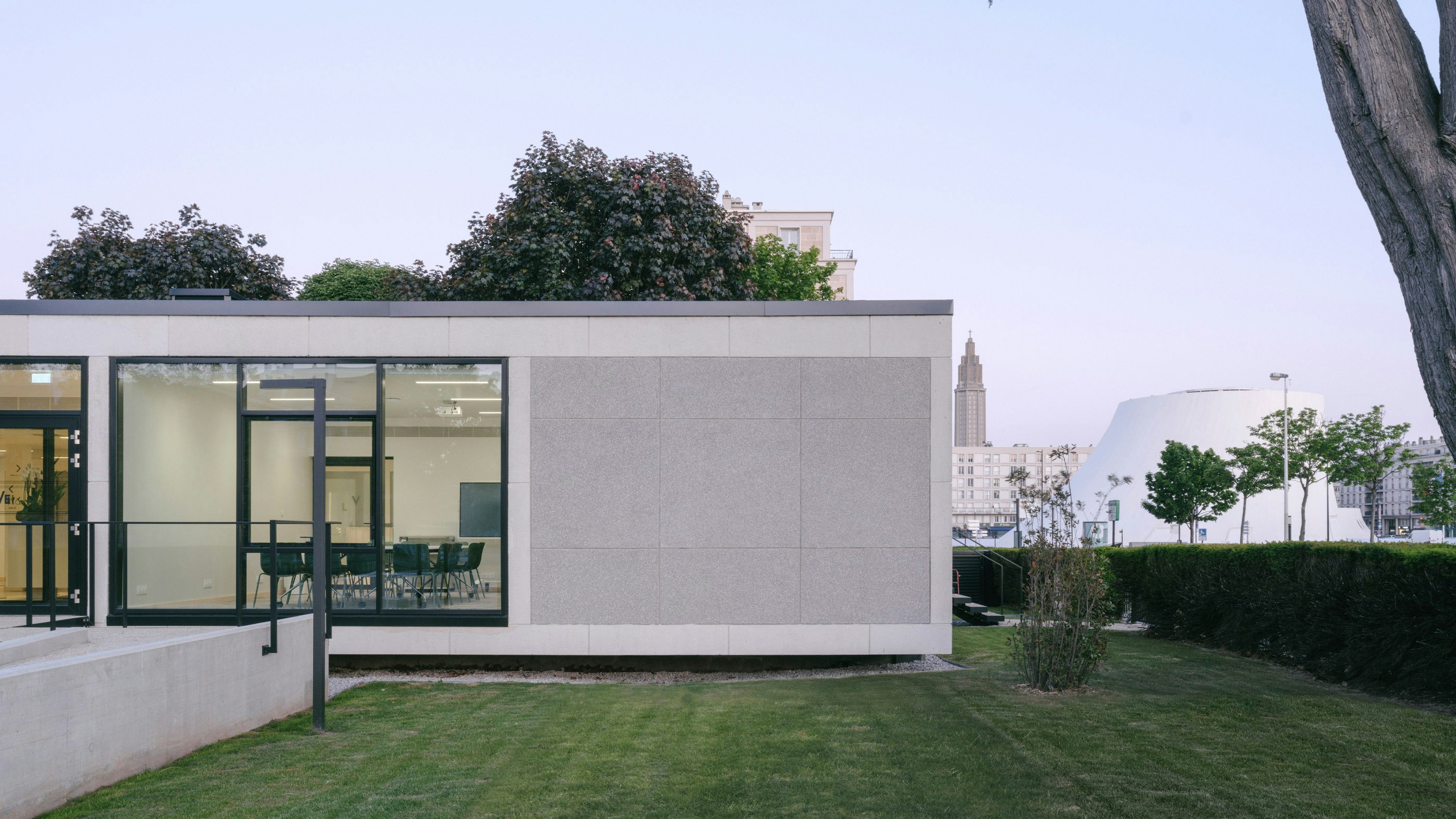
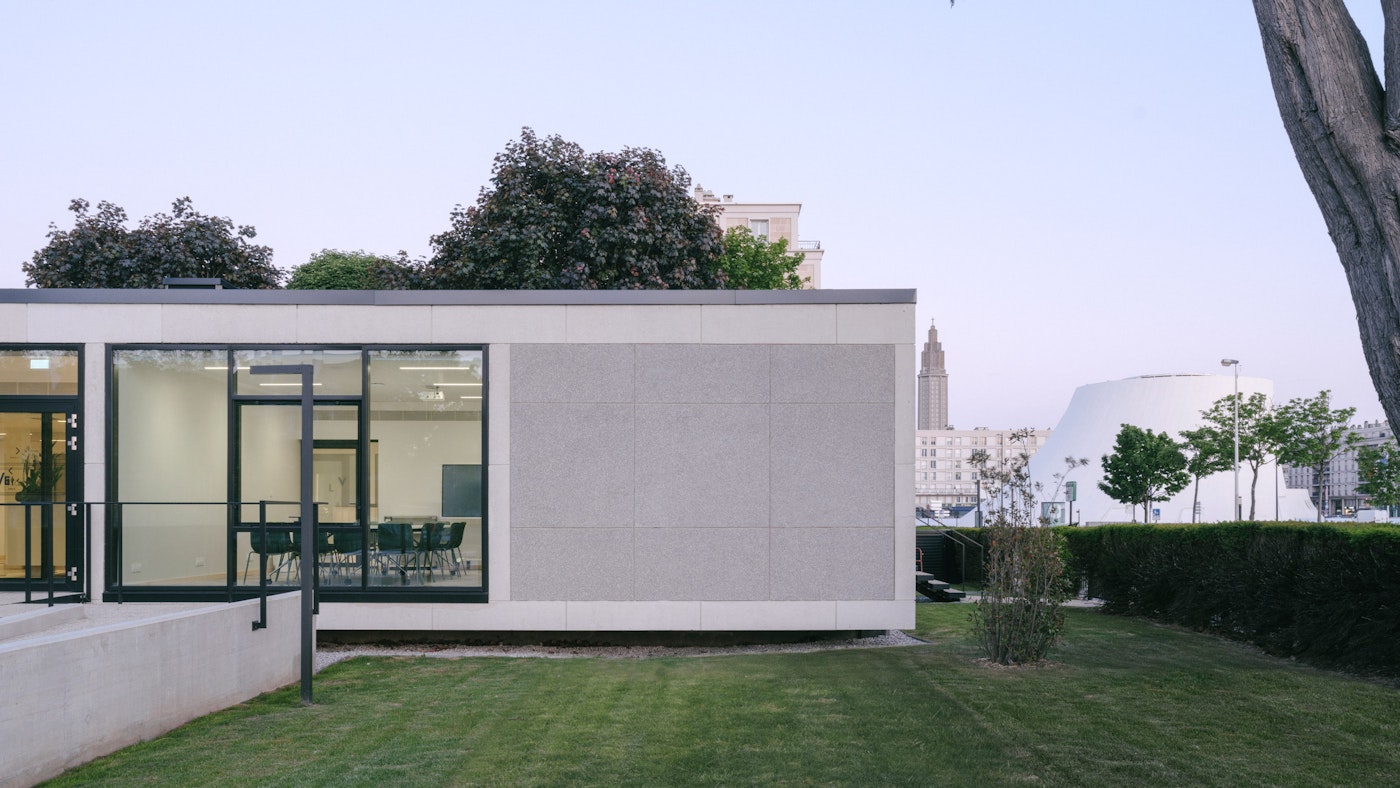
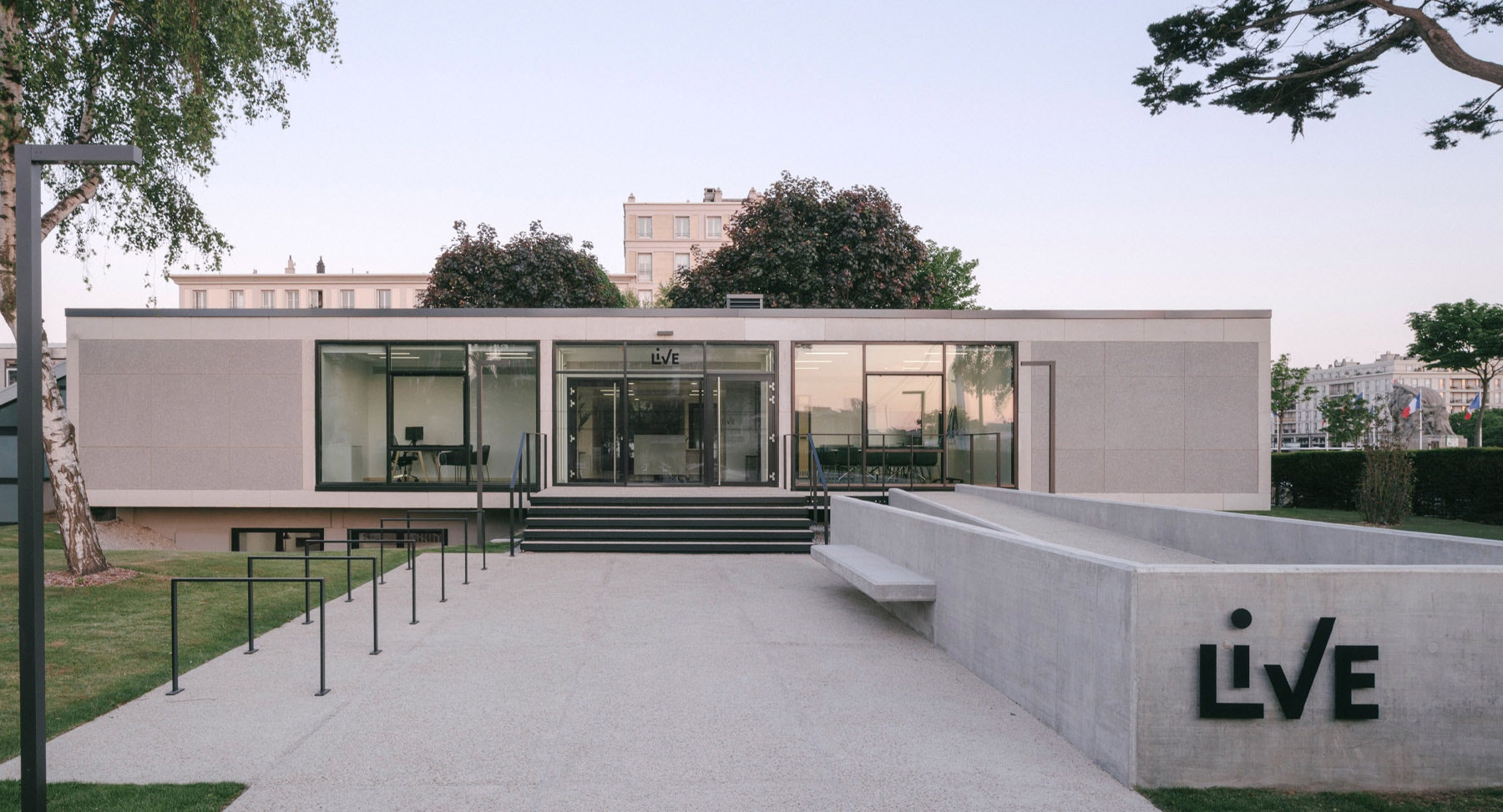
Through the transformation of a building designed by American architect Ralph Rapson—an emblematic post-war figure—STUDIOS Architecture delivers a precise and respectful interpretation of a rare architectural heritage. This landmark project combines architectural memory with a social mission: to host the LiVE vocational training center (L’Institut des Vocations pour l’Emploi), an association chaired by Brigitte Macron and dedicated to professional reinsertion..
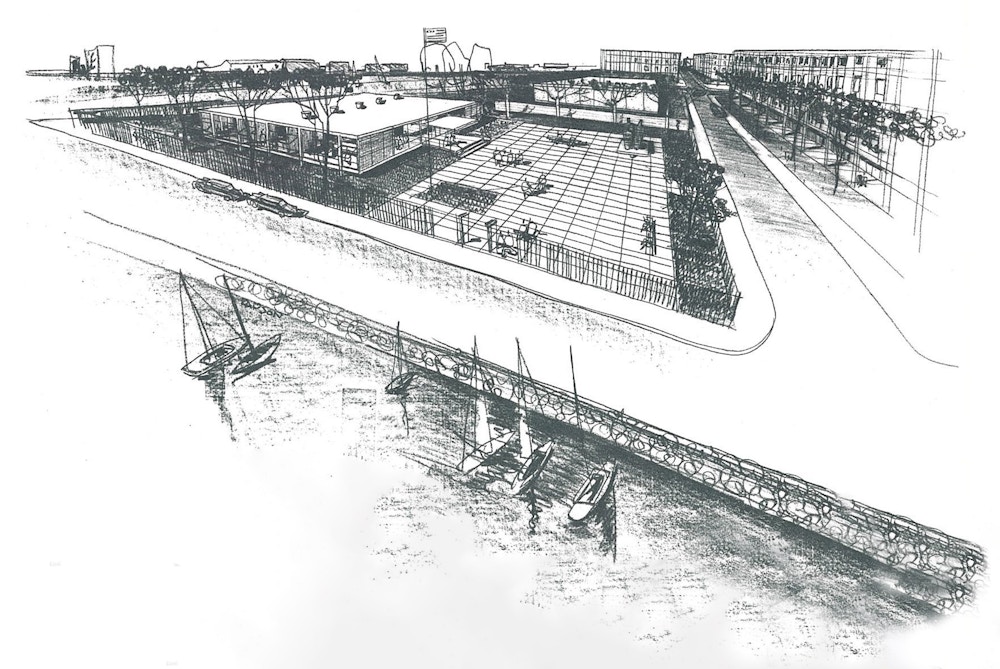
A Manifesto of American Modernism
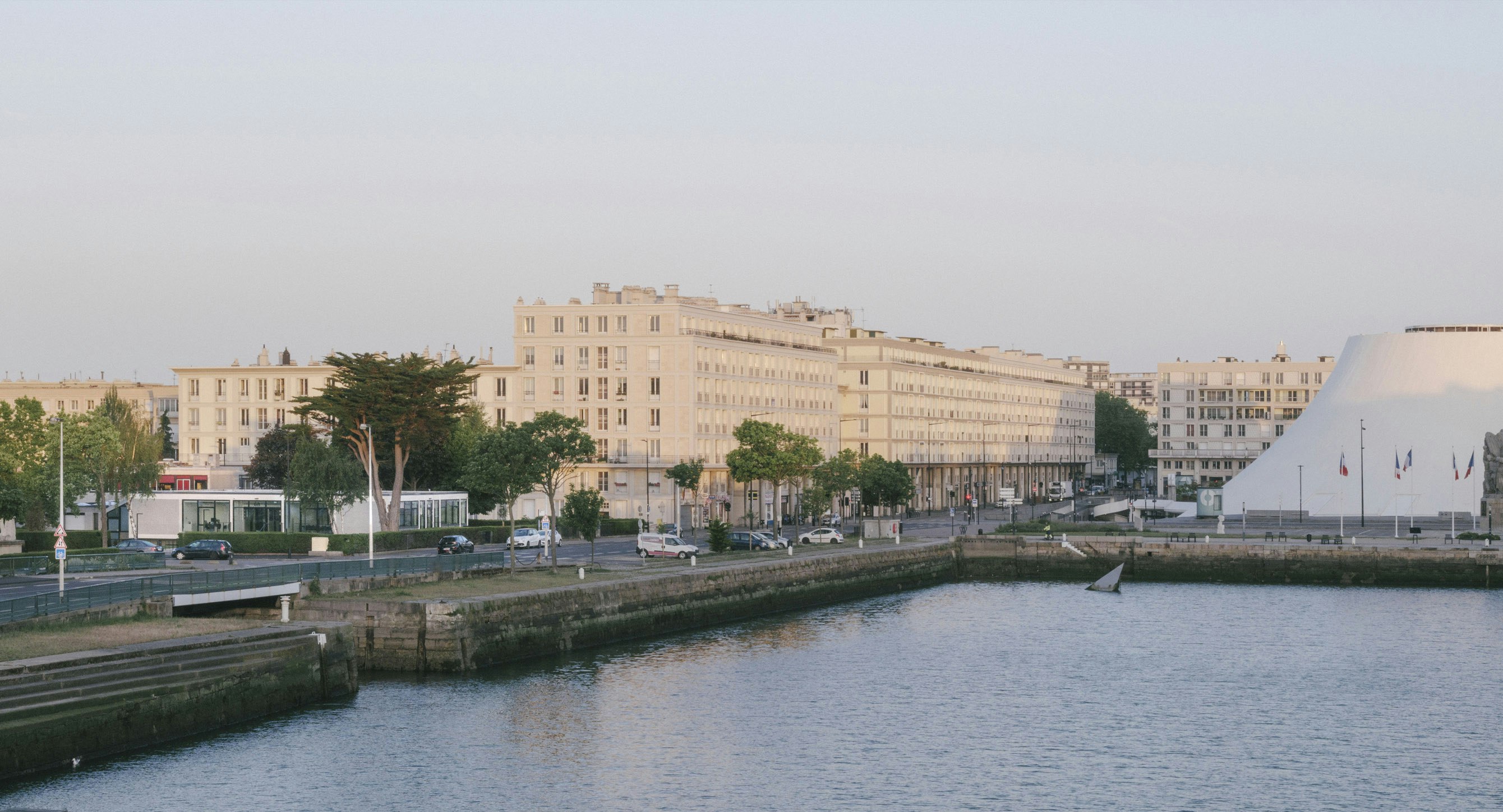
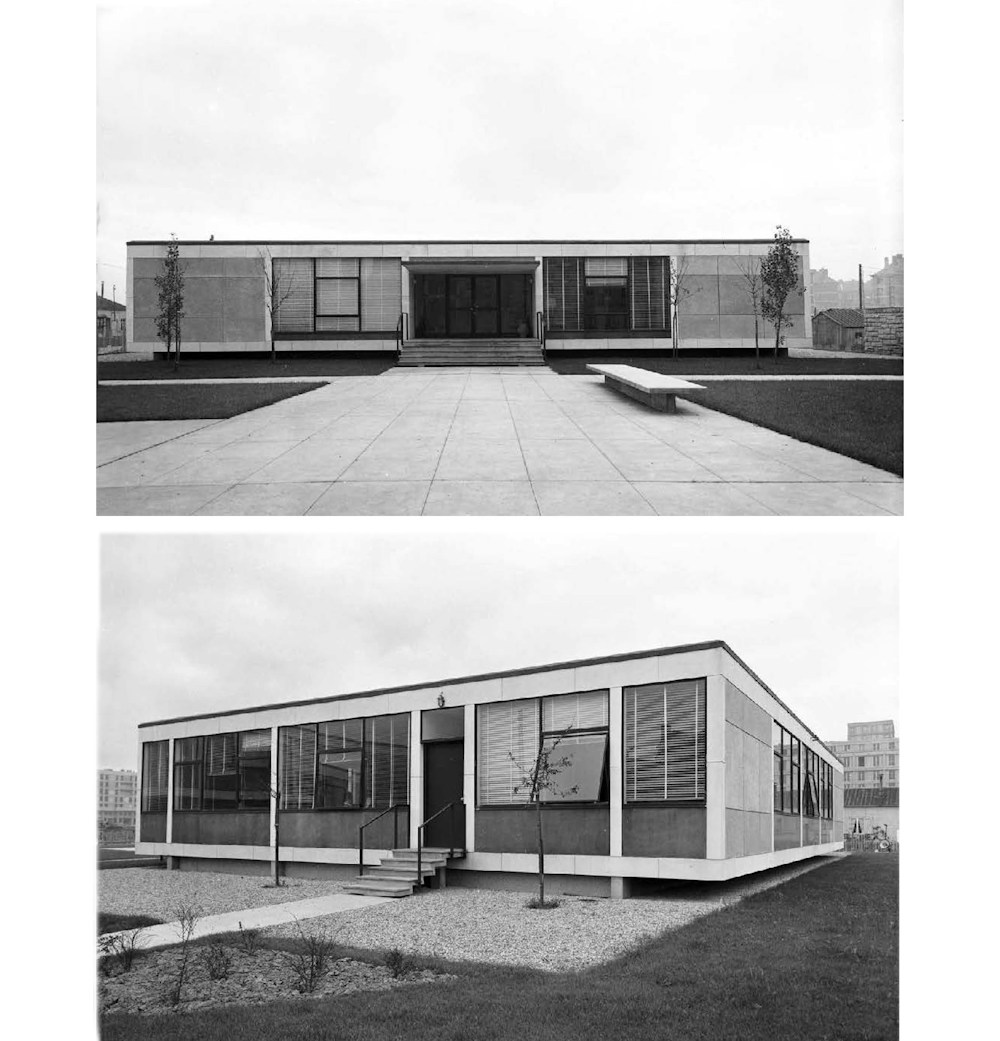
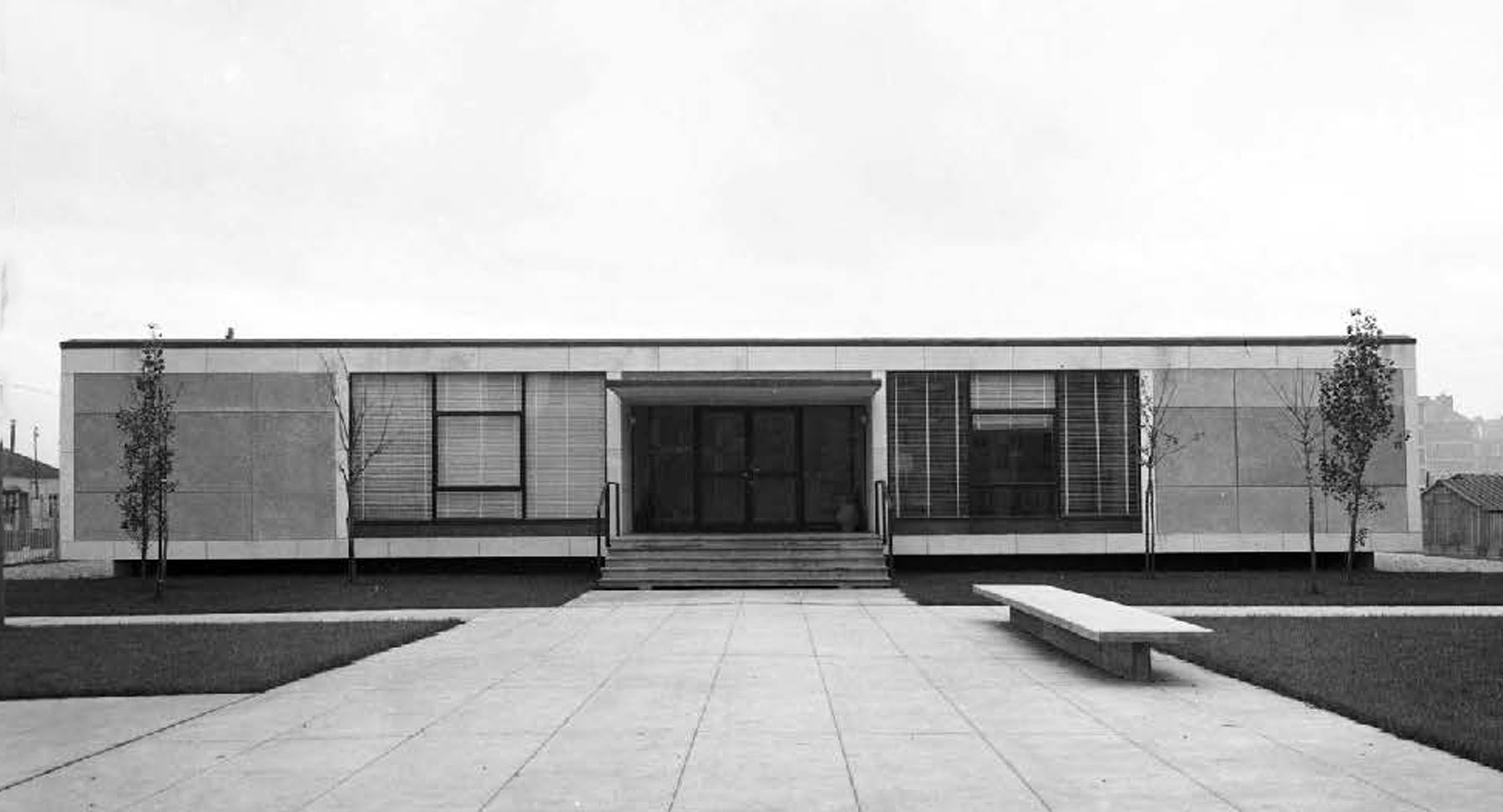
Designed in 1954, the United States Consulate formed part of Le Havre’s post-war Reconstruction Plan. Drawn by Ralph Rapson, King Lee W., and John Van Der Meulen, it became a model for numerous American embassy projects in Europe commissioned by the State Department starting in 1951.
« US Embassies should be …
1. Architecturally modern
2. Open and inviting, with one entrance for all
3. Bold, dynamic, and user friendly »
Ralph Rapson
Reinventing Without Betraying
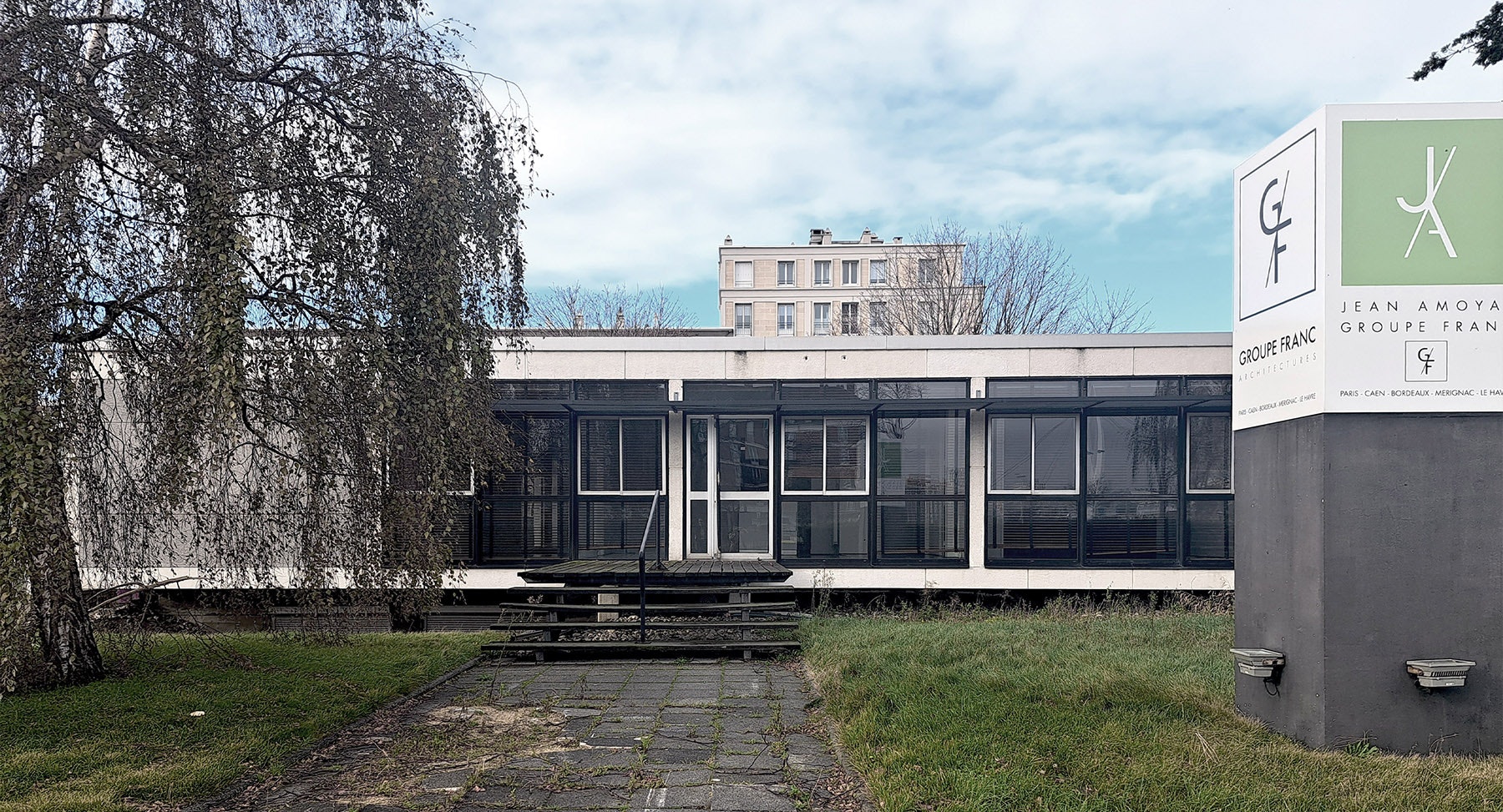
Over the years, this emblem of modernist architecture had been severely altered by successive interventions. The challenge was to restore the original spirit while meeting today’s requirements: thermal performance, accessibility, and new uses to accommodate the LiVE professional reintegration center.
The architects carried out meticulous architectural archaeology to revive the building’s original identity, working from the few remaining archival images. The historic structure was preserved, and the façades were restored and redesigned with new orientations to respond to the current urban context.
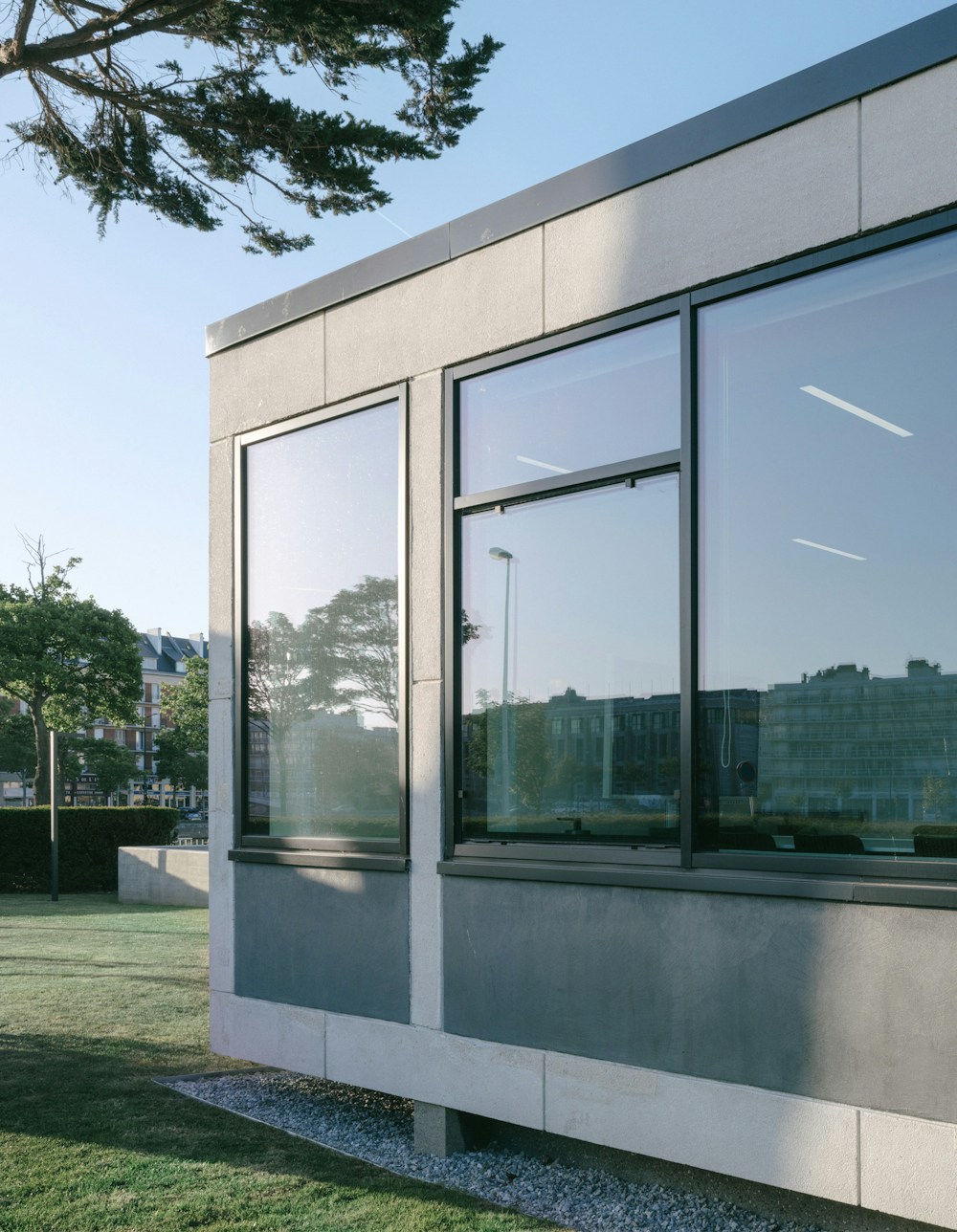
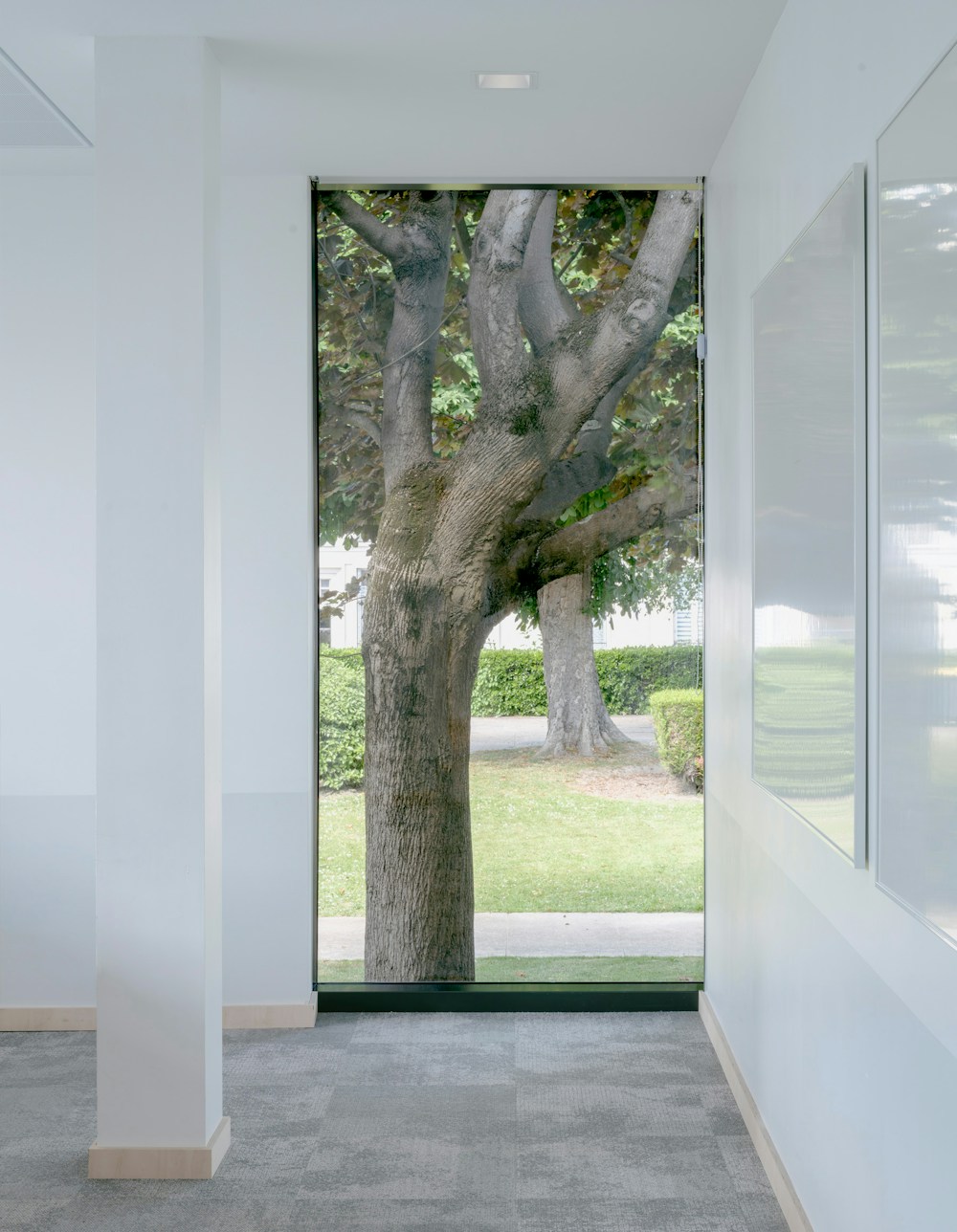
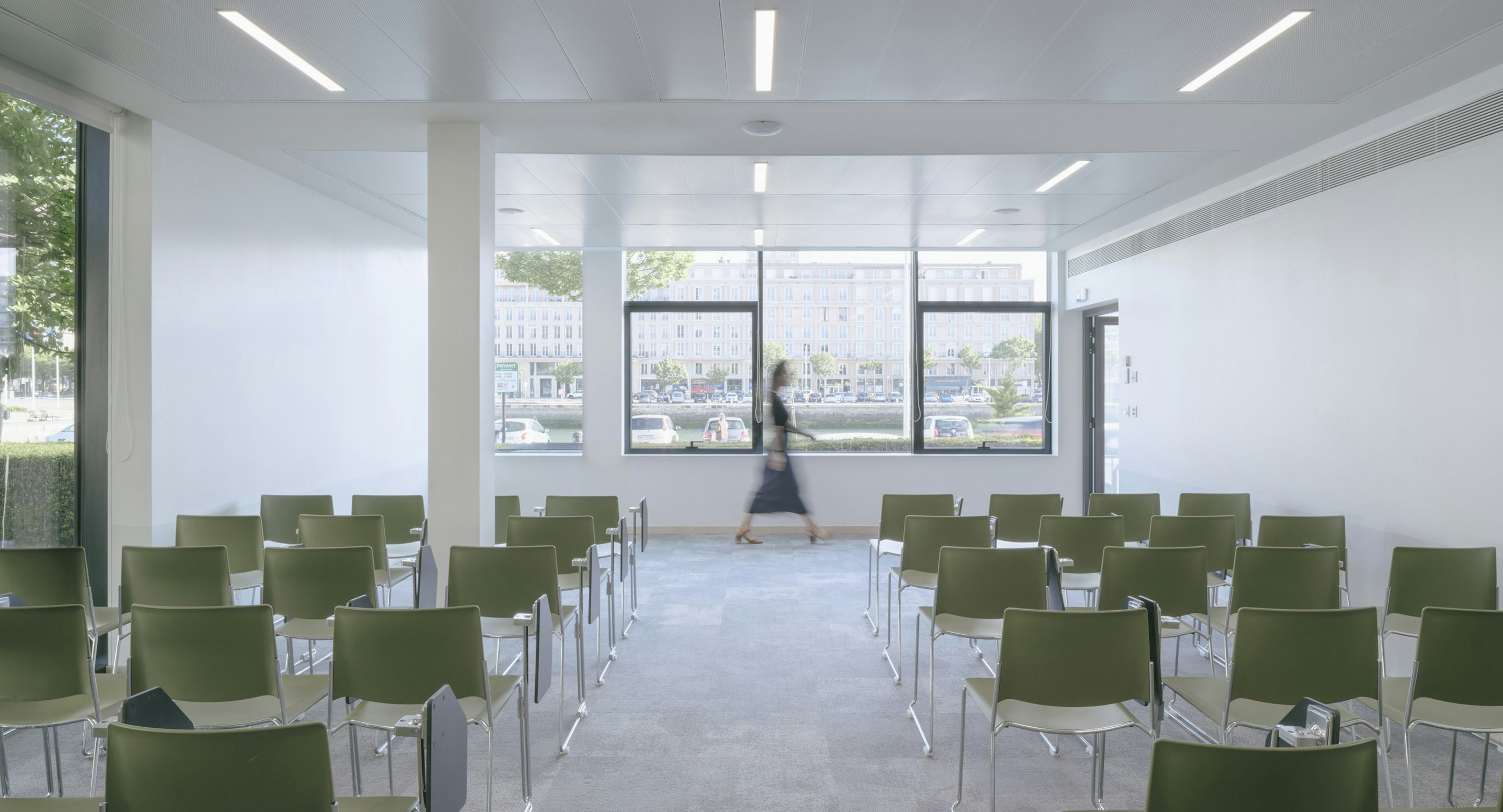
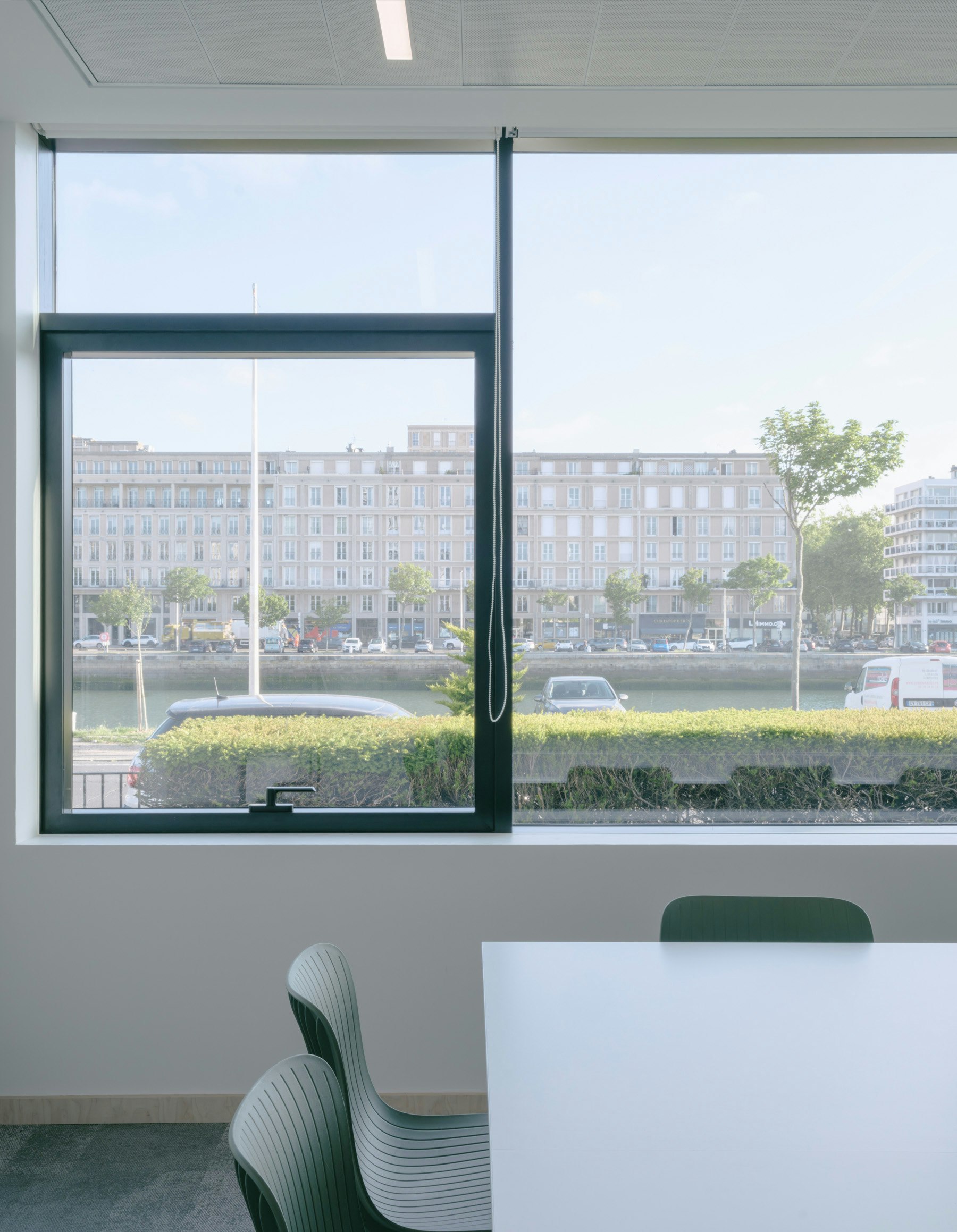
The façades underwent highly detailed work to recover their original lightness. Transparency and cross-views create a constant dialogue between interior and exterior, allowing natural light to filter through at every moment of the day.
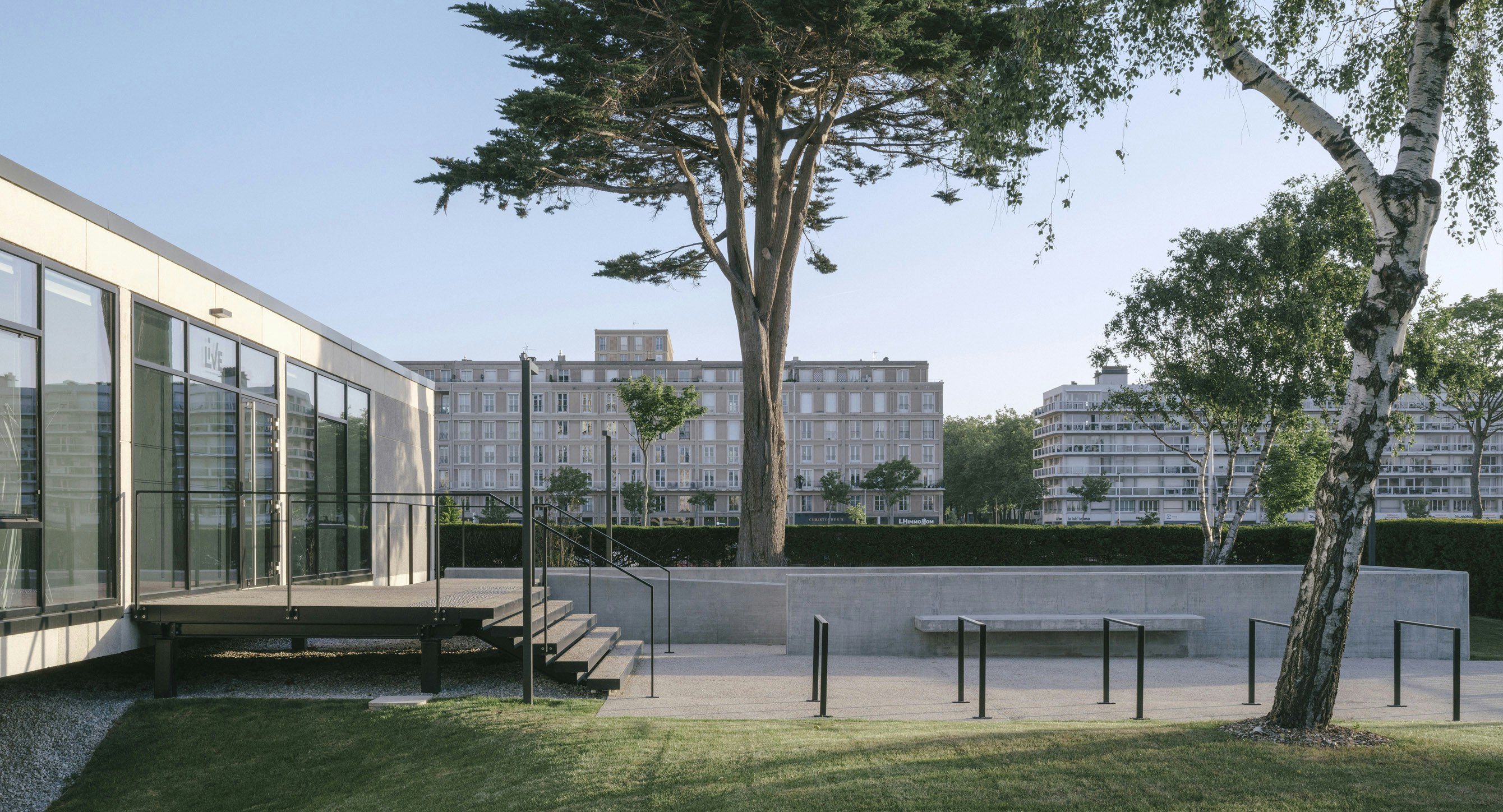
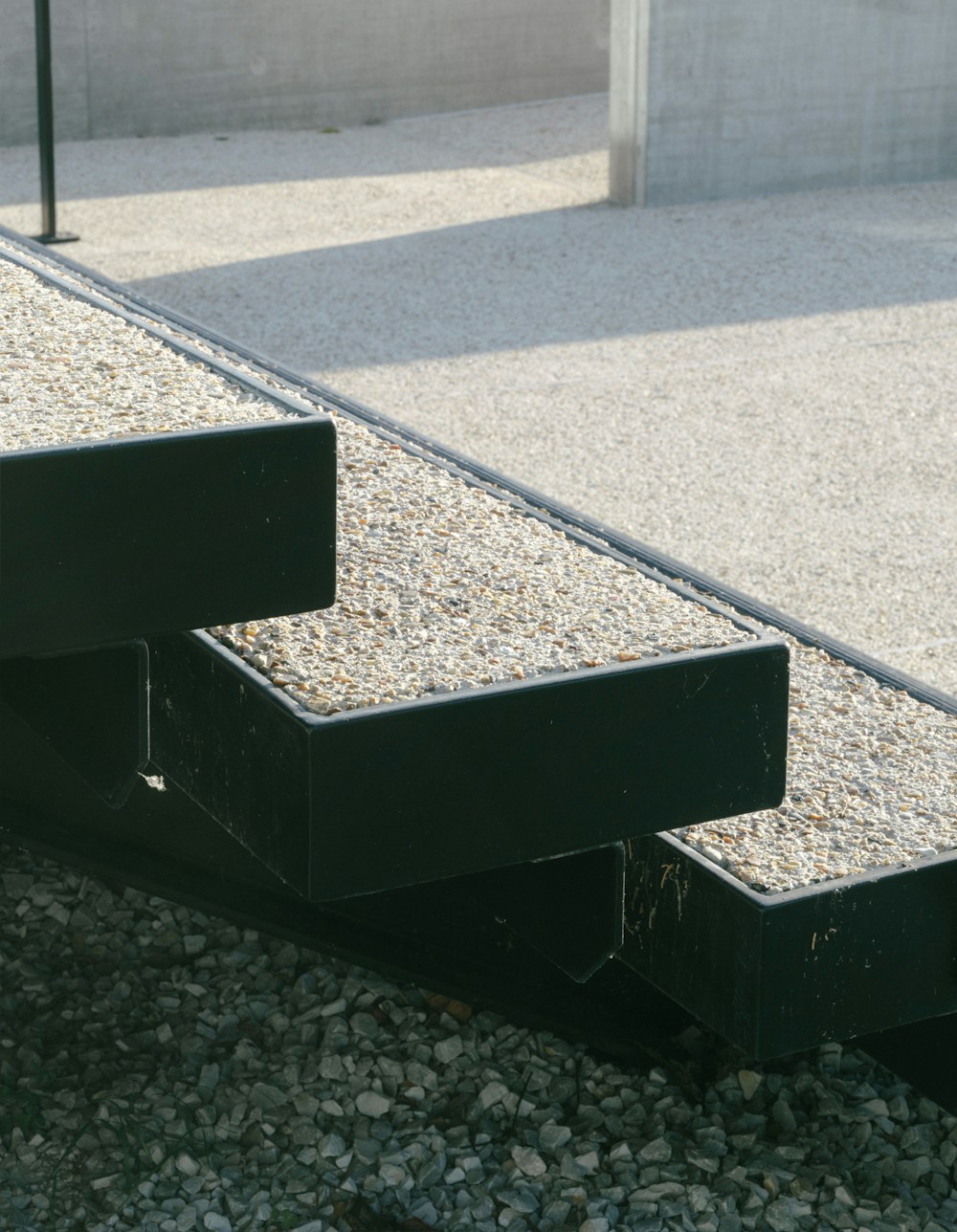
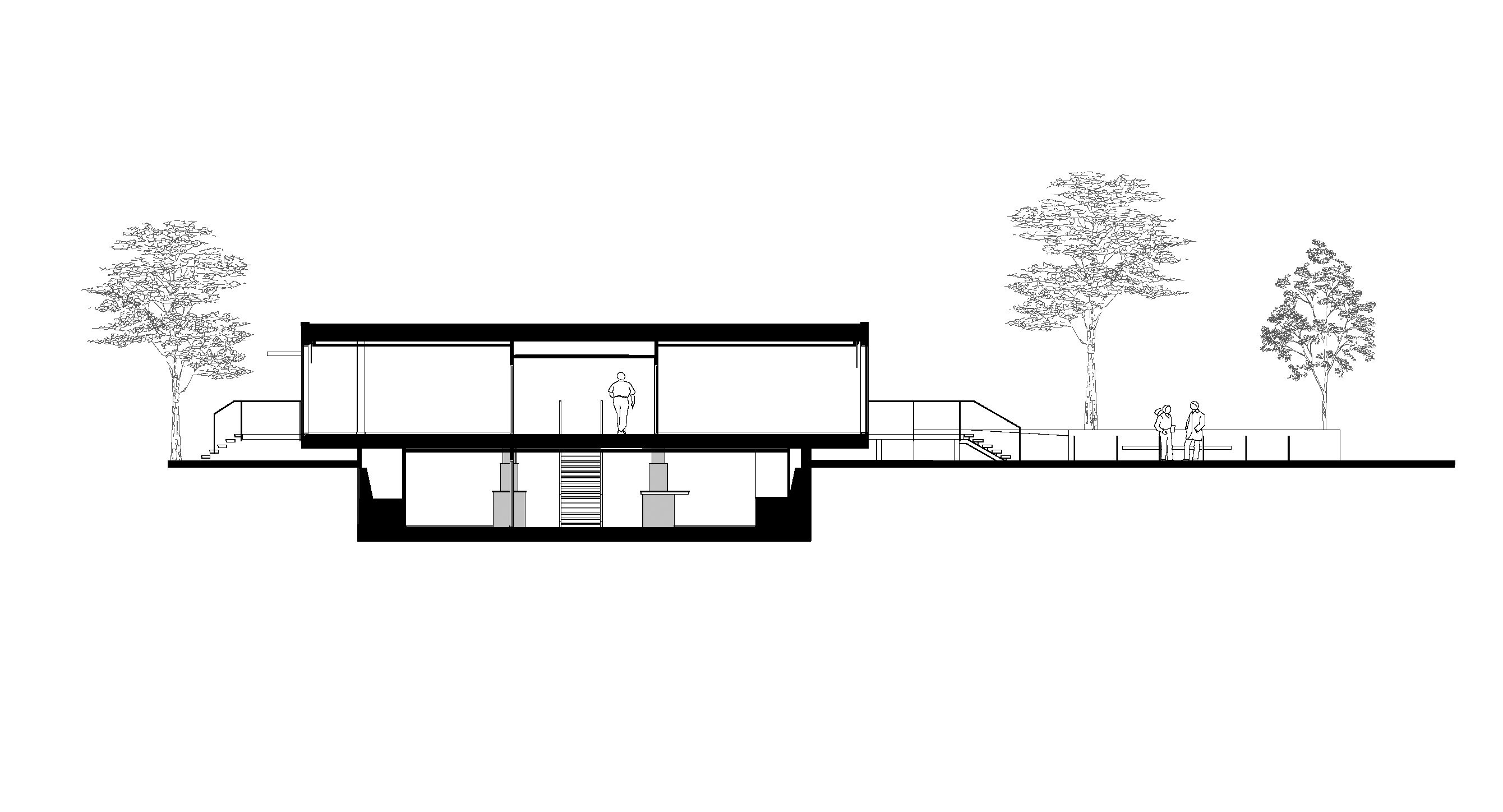
On the pond side, the forecourt—realigned with the main façade—now features an accessible ramp in exposed-aggregate concrete sourced locally, designed as a landscaped element. Inspired by Mies van der Rohe’s Farnsworth House, two stairs combining concrete and metal complete this modernist legacy with restraint.
.
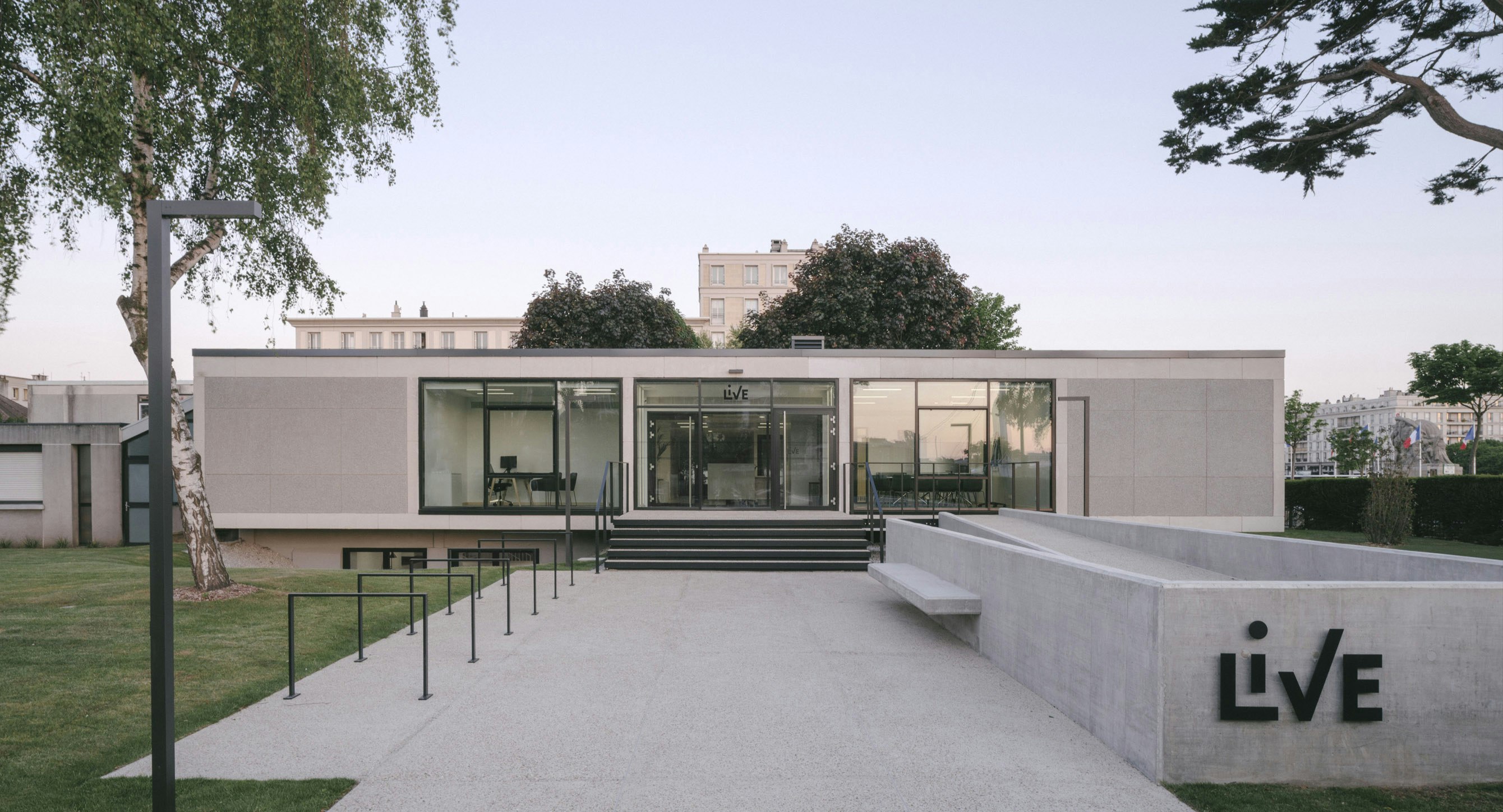
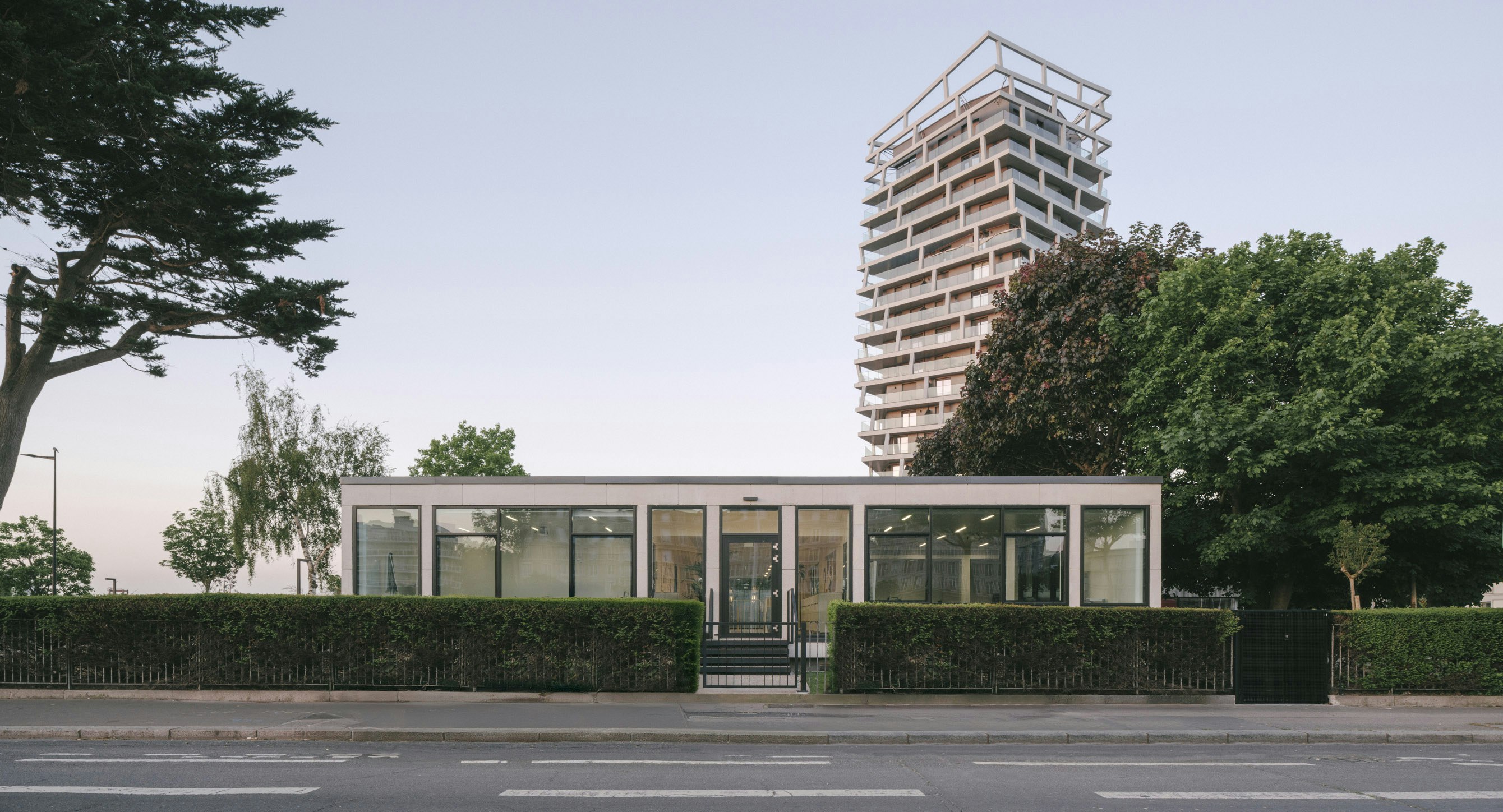
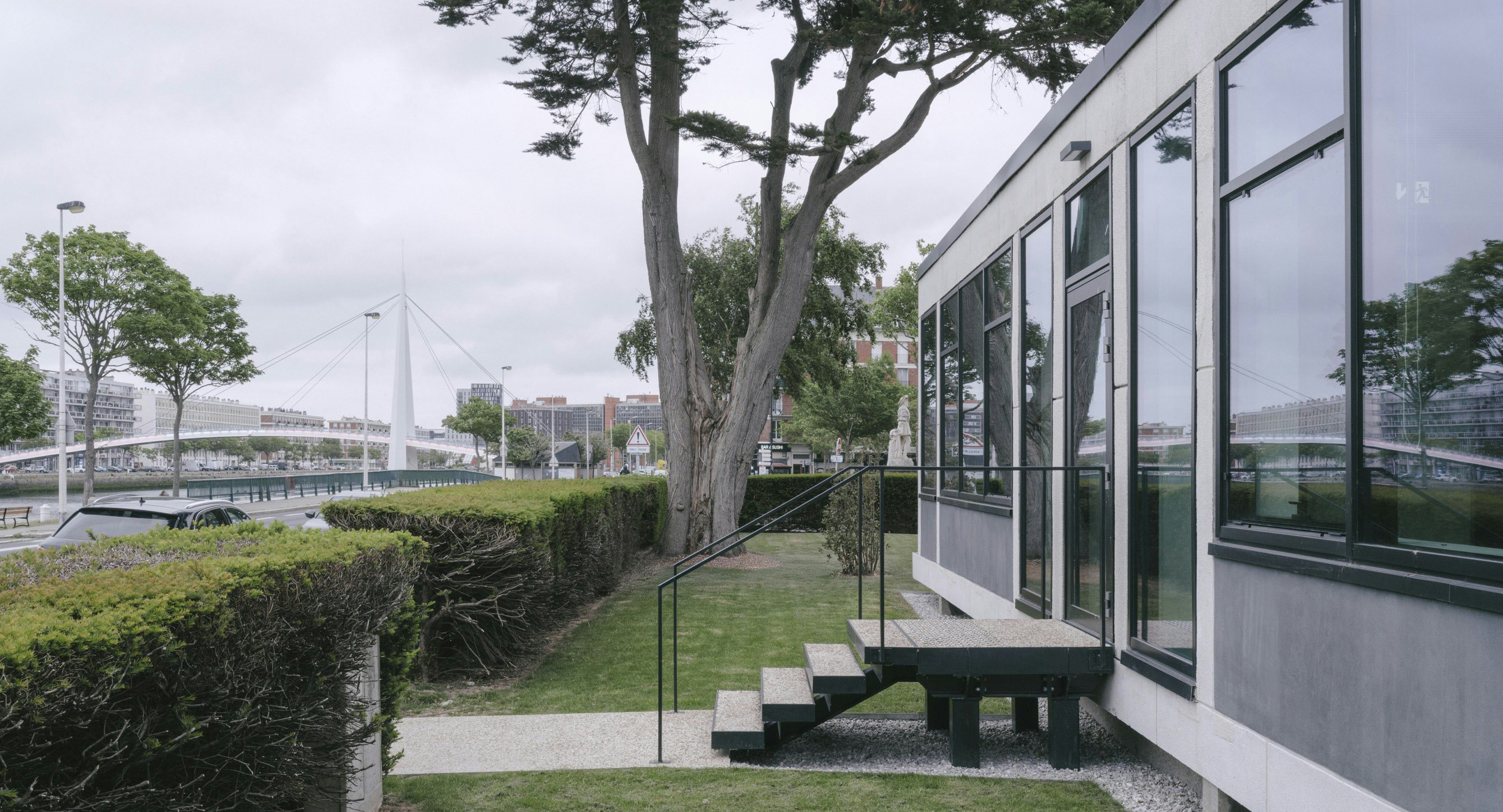
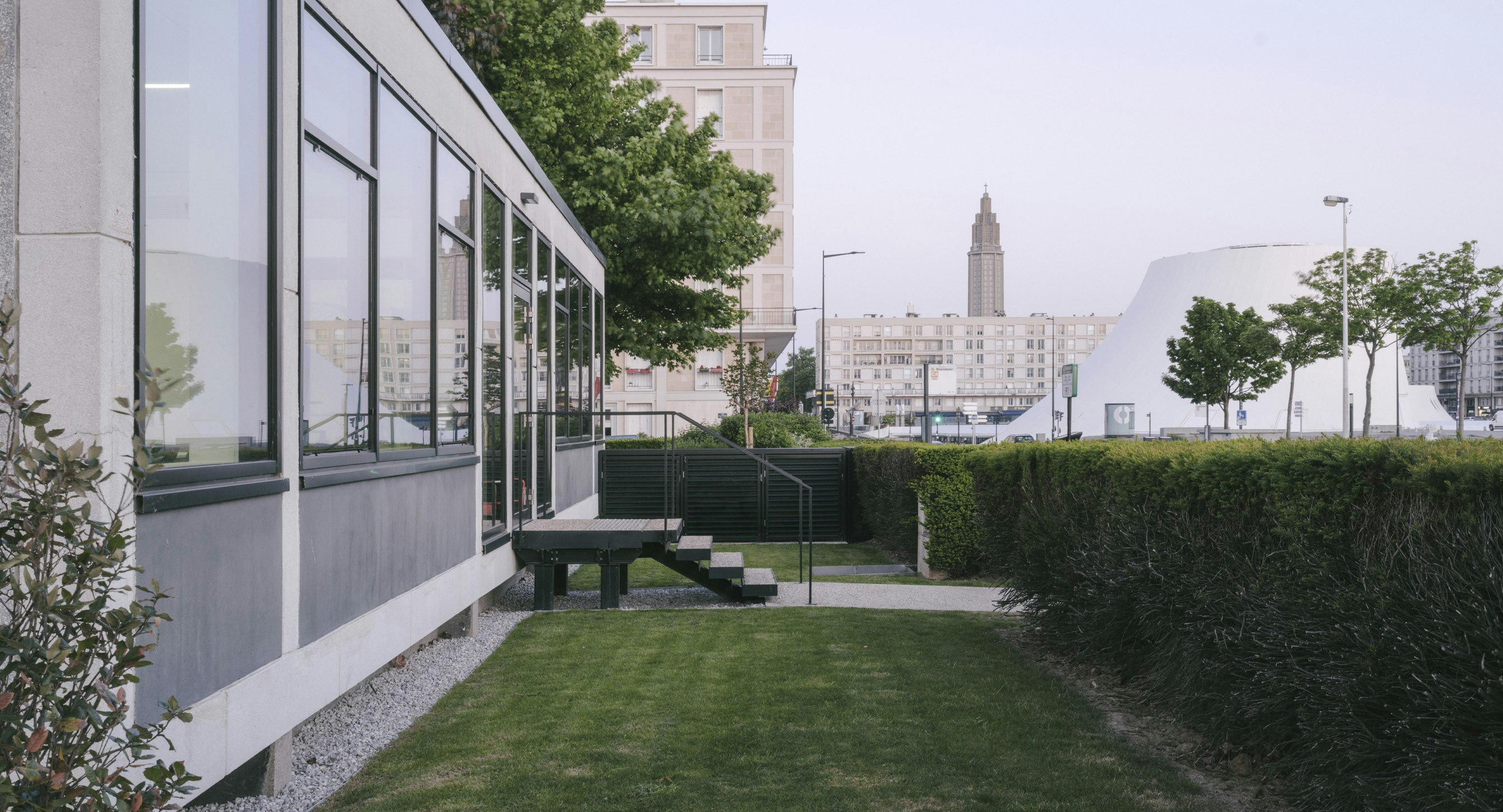
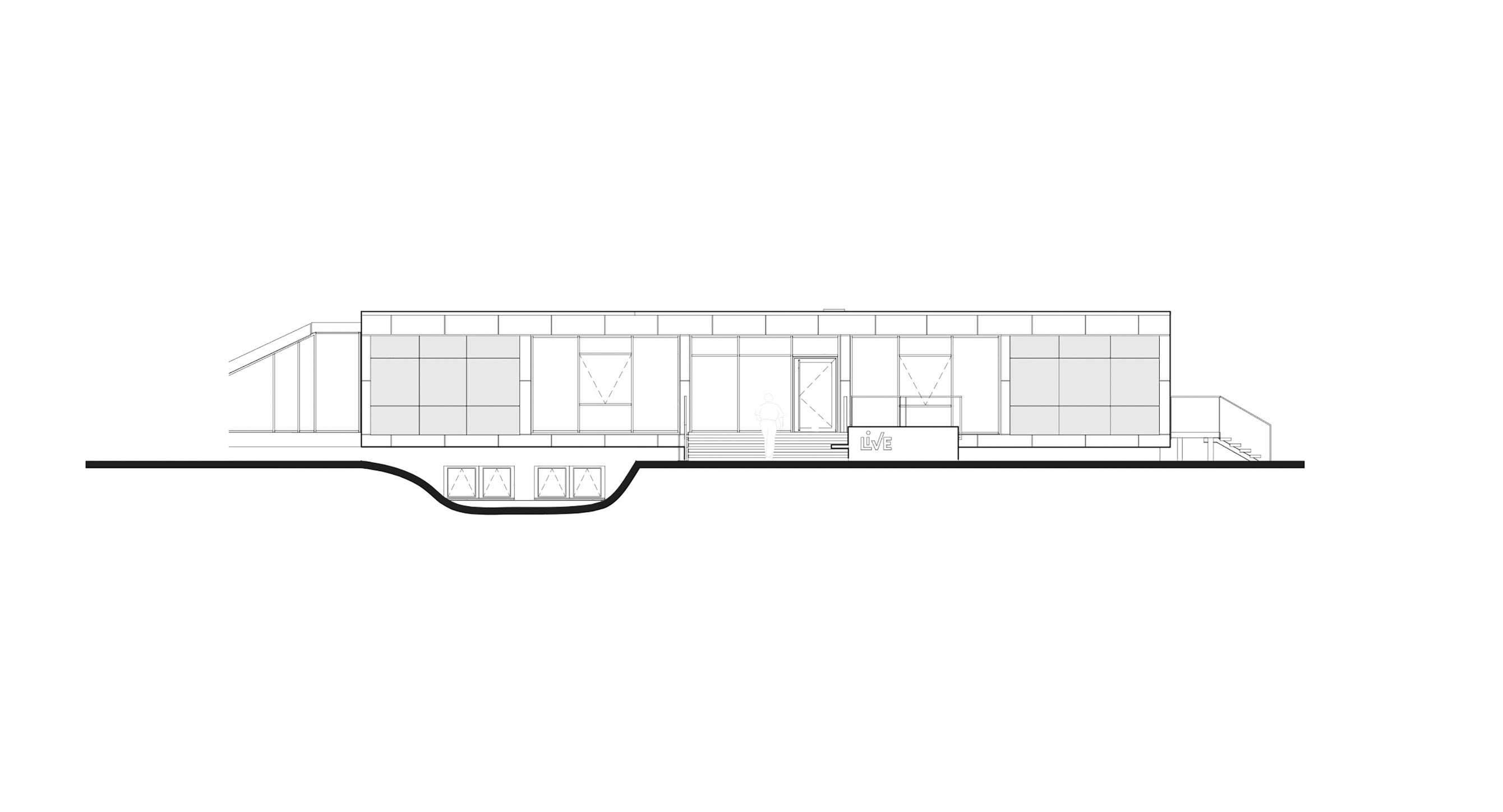
Once degraded, the project now expresses a light, rational architectural language, defined by precise proportions, transparency, and a reinforced concrete structure floating 50 cm above the ground.
A new social purpose
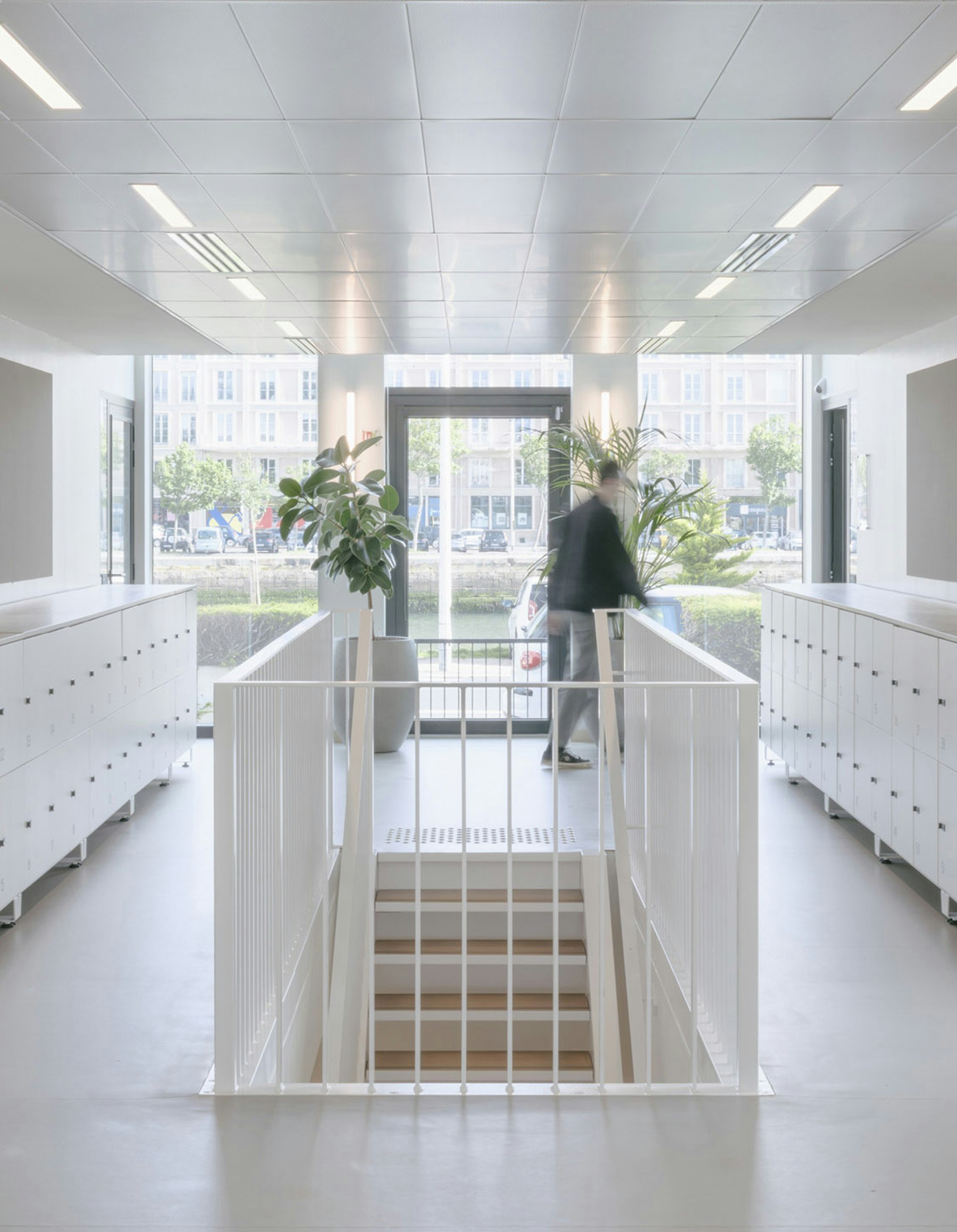
The building’s 500 m² are now occupied by the LiVE training campus. The fully reconfigured interior includes, on the ground floor, a reception area, four classrooms accommodating up to 60 people, a library opening onto the central core, and administrative offices. It is connected to the basement via two newly created stairwells and an elevator aligned with the façades, providing access to the communal kitchen and staff room.
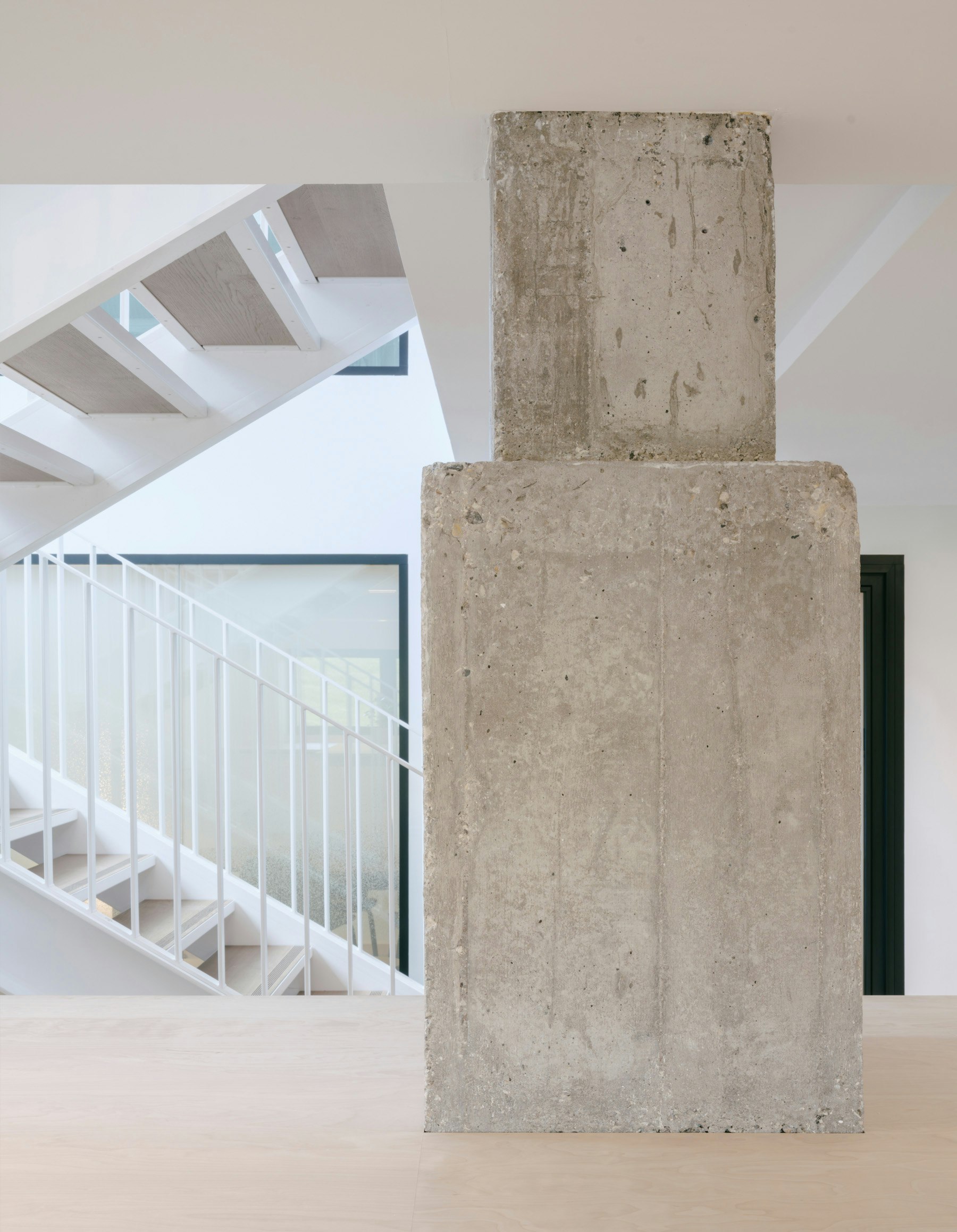
The building’s architectural legacy organizes the volumes and supports the interior design. The concrete plinths and columns become suspended tables and platforms; the stairwells float lightly within the space.
Awards
- City of Palo Alto, Architectural Review Board (ARB) Design Award | The Hub at Stanford Research Park
- ULI Washington Awards for Excellence, Finalist | MLK Gateway II
- Future of Work Awards, Jury’s Special Prize | Ledger HQ
- BIM d’Or, Tech Show Awards | Google AI Hub
- Interior Design Magazine, Best of Year Awards, Office Renovation, Winner | Meta EMEA Headquarters
- Interior Design Magazine, Best of Year Awards, Medium Tech Office: Finalists | WHOOP Headquarters
- ULI Europe Awards for Excellence : Winner | L’Atelier Covivio
- Interior Design Magazine, Best of Year Awards, Finalist: Large Early Education | Raymond Elementary School
- AIA DC, Awards of Excellence in Architecture, Chapter Design Award: Winner | Raymond Elementary School
- ULI Washington Awards of Excellence, Excellence in Institutional Development: Winner | Raymond Elementary School
- ULI Washington Awards of Excellence: Finalists | Raymond Elementary School
- USGBC, US Local Market Leadership Swards DC, MD, VA, Decarbonization Award: Winner | Raymond Elementary School
- Fast Company, Innovation by Design Awards, Best Workplace Design: Honorable Mention | WHOOP Headquarters
- Chicago Athenaeum American Architecture Award, Display Installations: Winner | Welcome Galleries at the National Building Museum
- Chicago Athenaeum American Architecture Award, Best in office Buildings: Winner | Meta EMEA Headquarters
- Interior Design Magazine, NYCxDesign Awards: Finalist | 825 Third Avenue
- CoreNet NYC Design Excellence Awards, Project of the Year Under 25K sq ft: Winner | 825 Third Avenue
- USGBC, US Local Market Leadership Awards DC, MD, VA, Judge’s Choice Award: Winner | MLK Gateway II
- NAIOP DC MD Awards of Excellence, Best Washington DC Urban Office: Winner | MLK Gateway II
- CoreNet New England Awards of Excellence, Large Workplace: Winner | WHOOP Headquarters